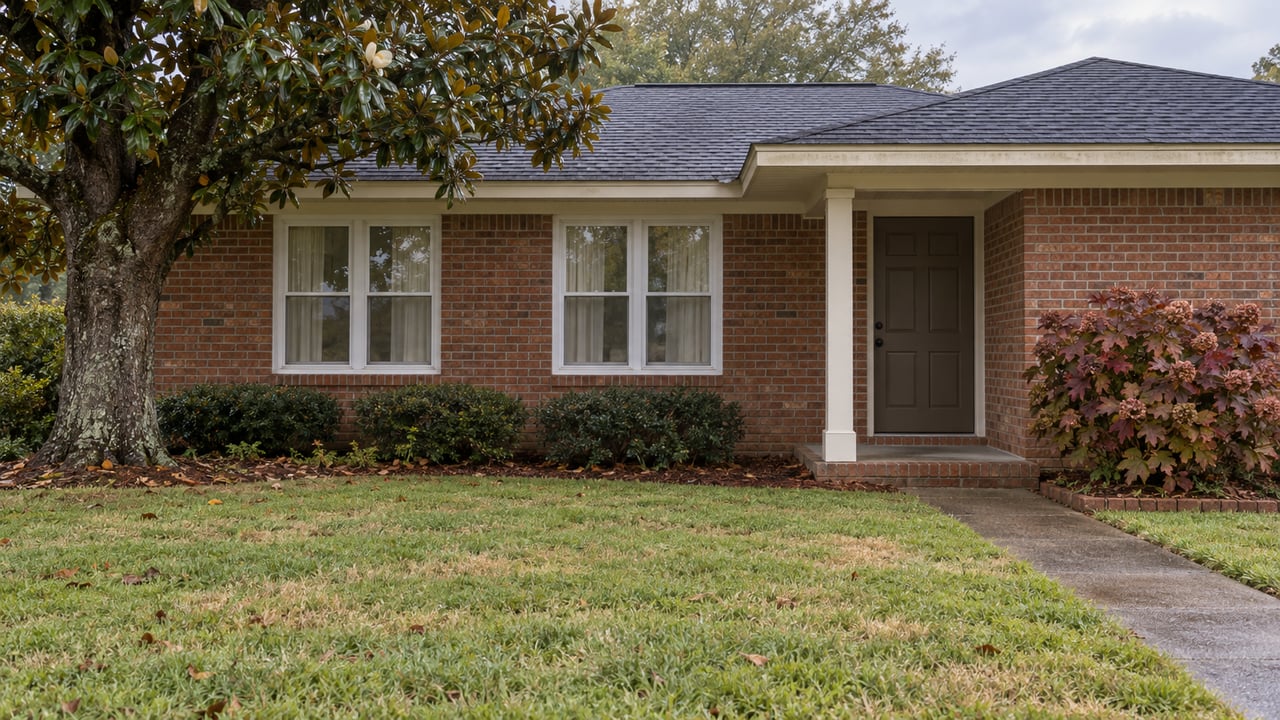
Under the front yard of every Shreveport home, a buried pipe carries wastewater from the house plumbing to the public sewer main. The city calls it the private sewer line, or house lateral. Shreveport's water and sewerage FAQ is direct about who owns it. "No, the City does not repair private sewer lines. Property owners are responsible for maintaining and repairing sewer pipes in their buildings and to the point of connection to the public sewer system."
The same page tells owners to have that lateral inspected. It explains that repairing broken private lines keeps stormwater out of the pipes and helps prevent sewer backups inside the home.
Past the property line, that pipe connects to a sewer system that has operated under a federal consent decree since 2014. The decree's original schedule runs out in November 2026. That is the system buyers in Shreveport are signing up to pay for every month, and its costs show up on the utility bill.
The Line Item That Grows Fastest
When a buyer estimates carrying costs for a Shreveport home, the water bill usually gets one rough number. A closer look shows that most of the money tied to usage goes to sewer, not water.
Here are the inside-city residential rates from the 10% increase Shreveport proposed in early 2024, which the City Council later approved. The Shreveport Times reported the before and after figures.
| Charge, inside city | Before 2024 increase | After 2024 increase |
|---|---|---|
| Water, tier 1, per 1,000 gallons | $1.33 | $1.47 |
| Water, tier 2, per 1,000 gallons | $2.66 | $2.93 |
| Water, tier 3, per 1,000 gallons | $3.99 | $4.39 |
| Water, tier 4, per 1,000 gallons | $4.52 | $4.97 |
| Sewer, per 1,000 gallons | $9.93 | $10.93 |
The sewer rate is more than seven times the first water tier and more than double the highest one. Customers outside the city limits pay even more for sewer, at $21.86 per 1,000 gallons after the increase.
The 2024 vote was unanimous. Council member Ursula Bowman made the motion, and Grayson Boucher seconded it, according to the Shreveport Times. KSLA reported that the new rates would start with the April 2024 water bill.
What Each Extra Gallon Pays For
KSLA published sample monthly bills when the increase was under discussion. Each total includes a $1 drinking water fee, a $0.50 security fee and a $7 garbage fee.
| Monthly usage | Bill before increase | Bill after increase |
|---|---|---|
| 2,000 gallons | $50.40 | $54.19 |
| 4,000 gallons | $74.25 | $80.83 |
| 6,000 gallons | $100.91 | $110.15 |
At the new rates, going from 4,000 to 6,000 gallons a month adds $29.32. Sewer quantity charges at $10.93 per 1,000 gallons account for $21.86 of that, about three quarters. A household with a pool or a big lawn, or simply more people at home, feels its usage mostly through the sewer rate.
That math also shows where future pressure falls. Any increase applied to sewer hits the largest usage-based line on the bill.
Twelve Years, Five Phases and a Deadline This November
The reason sewer costs so much in Shreveport goes back to the 2014 consent decree. Under the Clean Water Act case, the City of Shreveport settled with the U.S. Department of Justice, the EPA and the State of Louisiana. The EPA's settlement page says the alleged violations included more than 850 sanitary sewer overflows, and the settlement carried a $650,000 civil penalty.
The decree took effect May 13, 2014. It requires the city to repair sewer defects in five phases, add capacity to deal with overflows, and run maintenance programs, including a private lateral rehabilitation program. According to The Center Square's report in the Shreveport Times, the city agreed to finish the repairs by November 2026.
The city's own Year 11 annual report shows how ratepayers have already carried the program:
- The city spent about $450 million in the first five years of a program first estimated at $350 million over all twelve.
- Sewer rates rose 177 percent from 2013 through 2022.
- Sewer rates went up 6 percent in 2020, 2 percent in 2021 and 2 percent in 2022. Water rates rose 6 percent in 2020 and 4 percent in 2022.
- The city estimates the remaining decree work will likely cost more than $1 billion.
In the same report, the city says it cannot pay for all remaining obligations without rate increases that would put "an unconscionable financial burden on its ratepayers." The report also describes the 2024 10% increase as a step to meet bond covenants and debt service coverage ratios. It does not describe it as a recurring annual increase.
The Request for More Time
By spring 2026, City Hall had said it would not meet the November deadline. The Center Square reported in March that the first two phases were complete. Progress on the third phase slowed because of what a project report called "the city's limited financial resources and inability to fully fund all phase 3 projects." The city is asking for 15 to 20 more years and expected a decision on that request by the end of the year.
Mayor Tom Arceneaux tied the extension request to rates. "What we've been arguing is that our population cannot sustain the kinds of rate increases that would be required under a quicker resolution of the physical issues," he told The Center Square.
The same report said federal agencies have demanded $17.7 million in penalties starting in 2022, and the city is negotiating for a settlement or forgiveness. Arceneaux said that paying those penalties would mean increasing sewer rates.
So the schedule for future sewer rates depends on two open questions: how much time federal regulators allow, and whether the penalty demand is paid, reduced or forgiven.
What Has Held Rates in Place Since 2024
Several decisions since the 2024 vote have pointed away from new charges on the bill.
On October 9, 2025, Arceneaux withdrew a proposed temporary 2% surcharge on all water and sewer bills. That surcharge was meant to raise $3 million over 18 months for demolishing blighted buildings, not to fund the utility.
In December 2025, the city refinanced $168 million in water and sewer debt. KSLA reported that the mayor expects savings of more than $11.4 million over 15 years and said they would help make future rate increases smaller.
Money from outside the rate base is also in the plan. Voters approved an $82 million water and sewer bond proposition in April 2024, with about $52 million for sewer projects related to the decree. The city has also pursued a $52 million WIFIA federal loan and state revolving-fund financing. Named work includes upgrades at the Amiss Water Treatment Plant, lift station repairs, valve replacements and sewer main work, according to KTAL. The Southern Hills interceptor and lift station improvements are also on the list.
The water side has its own aging pipes. In March 2026, a 42-inch concrete main inside the city's plant broke, the Shreveport Times reported. KSLA reported that the pipe was installed in 1979 and that the break caused low pressure and a citywide voluntary boil advisory. The Year 11 report notes that water supply, treatment and distribution costs come on top of the decree estimate.
The Dates Between Now and Year End
Three dates will decide much of this before the year is out:
- November 2026. The original decree schedule runs out, with the city's extension request still pending as of its last public update.
- December 8. KTBS reported that the council introduced the proposed 2027 budget and tabled it until this date.
- December 15. City law requires the budget to be adopted by this date. The proposal includes a $145.9 million water and sewer operating budget, according to KTAL.
KTAL's report on the 2027 proposal did not include a new customer rate increase.
Across the river, Bossier City took a different route. It approved water rate increases under Ordinance 1 of 2025 and added a second 2% step on January 1, 2026, according to the Bossier Press-Tribune. Buyers comparing the two cities are comparing two utilities on different paths. Shreveport's path depends on a federal negotiation.
Quick Answers
Is the sewer pipe from a Shreveport house to the street the city's responsibility? No. The city's FAQ says property owners maintain and repair private sewer lines up to the connection with the public system. The city recommends having that line inspected.
Has Shreveport approved a sewer rate increase for 2027? The 10% increase approved in 2024 is the most recent systemwide rate increase the council has approved. The 2% surcharge proposed in October 2025 was withdrawn before a vote. The 2027 budget proposal on the council's calendar did not include a new customer rate increase.
What happens if the extension is approved? The city has said more time would allow smaller rate increases than a faster repair schedule would require. The terms of any extension have not been made public.
This post is general information, not legal or financial advice. Confirm your own property's obligations and costs with the city utility and the right licensed professional.
When we help buyers plan carrying costs in Shreveport, we put the sewer line on the monthly budget and the private lateral on the inspection plan, and we time both with the December council calendar in mind. If you're comparing homes inside and outside the city limits and want the utility side mapped out before you write an offer, Murcia & Co. will build that comparison with you. Let's Connect.